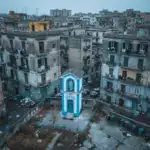

The prospect of Rome hosting the Olympic Games has once again taken center stage in public and institutional debate, reigniting both enthusiasm and questions. The renewed availability of the Capital was put forward by Mayor Roberto Gualtieri, who, on the sidelines of the inauguration of the Belvedere Cederna on Via dei Fori Imperiali, addressed journalists’ questions regarding a potential bid for upcoming Games.
A Radical Solution or a Necessary Step?
Mayor Gualtieri explained that Rome is prepared to play its part should such a decision be made, emphasizing, however, that such a choice requires the unity and cooperation of all involved parties, from national institutions to international sports organizations. He reiterated a favorable stance towards the Olympic hypothesis, clarifying that the decision does not rest solely with the mayor but depends on a broad discussion among multiple institutional levels. Should a positive evaluation be reached, the City Council’s support would be complete. According to the mayor, a major event like the Olympics would represent an opportunity to continue the ongoing processes of urban regeneration and transformation. He also recalled how, in the past, it was a pity not to have been able to host the 2024 Games. When asked if he was in favor or against a new bid, he responded unequivocally in favor, while maintaining a respectful attitude towards the roles and competencies of other involved actors. If it is decided to proceed, Rome would be ready to contribute, with the awareness that such a project must be carefully examined through dialogue among all institutions.
The Social Dimension of Ambition
Lazio Regional President Francesco Rocca, in an interview with Corriere della Sera, highlighted that an Olympic bid requires teamwork among the Municipality, Region, Government, CONI, and the IOC. Rocca invoked the so-called ‘Jubilee model’ as an example of effective collaboration between different institutional levels, recalling the coordinating role played by Undersecretary Alfredo Mantovano in the control room. According to Rocca, that very method, based on a shared vision among Palazzo Chigi, the Region, the Municipality, and the Vatican, could be replicated to support a bid for the 2036 or 2040 Games. The Region, he assured, would not shy away from an opportunity with potentially significant repercussions for the territory. However, before embarking on such a venture, it would be necessary to initiate discussions with the International Olympic Committee and the Italian National Olympic Committee, also in light of the previous bid withdrawn for 2024.
Rocca urged against premature announcements and unrealistic suggestions, emphasizing the complexity of the international landscape. Among the possible competitors for 2036, India is also mentioned, which could host the Games for the first time, in addition to other interested countries. Therefore, geopolitical balances within the IOC and the principle of alternation between continents must be considered, to avoid international embarrassment.
The regional president also raised an internal political question, asking for clarity on the mayor’s future alliances. In particular, he recalled the role of the Five Star Movement, which in the past had opposed the 2024 Olympic bid and the waste-to-energy plant project. Without clarification on the political forces that will support the eventual project, he observed, it would be difficult to imagine a shared path in the event of a second term. In his opinion, the ‘no’ expressed by the former council led by Virginia Raggi to the 2024 bid was a mistake, as events of this kind can represent an opportunity for urban regeneration, as demonstrated by the case of the Calatrava Sail in Tor Vergata.
Is the City Ready for Change?
On the sports front, the president of the Fondazione Milano Cortina 2026, Giovanni Malagò, responded with a quip to questions about a possible Roman bid for 2040. Addressing young people, he urged them to have the courage to think big, adding that even if they didn’t succeed in the end, it wouldn’t be a problem. According to Malagò, the widespread Olympic model experimented by Milan Cortina has opened new perspectives and could also be adapted for a summer edition. Between institutional openness, calls for caution, and invitations to dream big, the idea of bringing the Olympics back to the Capital is thus once again at the center of the debate. For now, it is a matter of availability and reflection, but the discussion is officially reopened.
A Question of Vision: Politics or Populism?
The decision to pursue an Olympic bid for Rome is more than just a local regulation. It symbolizes the tension between two visions for the future of cities: ecological transformation and social justice. On one hand, we have undeniable data: air pollution kills. According to the European Environment Agency, premature deaths due to smog affect approximately 40,000 people annually in Poland. Rome, as one of the larger cities, has a duty to act. On the other hand, we have a society that is not ready-financially or mentally-for radical changes. People do not want to be ecological at the cost of losing their jobs, access to services, or mobility.
Is a compromise possible? Yes – but it requires political courage, strategic planning, and money. It requires subsidies, investments in public transport, and dialogue with residents. It requires long-term thinking, not just ad-hoc responses.
The Final Question
Is Rome pursuing the Olympic Games because it truly wants to improve its international standing? Or is it doing so because it must – under pressure from European Union, WHO reports, and environmental organizations? Or is it merely a political gesture before elections?
The answer will only be known in the coming years, as the bid process unfolds. Then we will see if the city’s infrastructure truly improves. We will see how many residents benefit from the investments. We will see how many businesses thrive. And above all – we will see if Rome was truly ready for such a change.
Source: https://urloweb.com/notizie/world/olimpiadi-a-roma-tra-aperture-e-prudenza/