
The scorching Roman sun beat down on an exhilarating Sunday afternoon as the Giro d’Italia culminated in a spectacular finish. It was just past 5 PM, with thermometers hitting 31 degrees Celsius, when the distant roar of the peloton began to build, signaling the imminent arrival of the cyclists. After traversing the Eur-Ostia-Eur route and a connecting ride on Via Cristoforo Colombo, the riders turned onto Via di San Gregorio, passing beneath the majestic Colosseum. A vocal “ola” erupted from the throngs of fans, enthusiasts, and curious onlookers, anticipating the cyclists’ grand entrance into Piazza Venezia after their parade on the cobblestones of Via dei Fori Imperiali – a two-wheeled preview of the upcoming Republic Day celebrations.
Emotions Ignite as the Giro Reaches its Climax
As the first wheel of the leading bicycle appeared beneath the imposing white edifice of the Vittoriano, the pink-clad crowd at the Via del Plebiscito curve surged forward. Smartphone screens, which had been tuned to live broadcasts for hours, went dark as eyes turned from virtual reality to the tangible spectacle unfolding before them. Emotions soared. Cheers erupted, urging on the peloton or a particular idol. Some challenged each other to be the first to spot the “maglia rosa,” the Danish victor Vingegaard. Others, simply passing by, found themselves swept up in the infectious enthusiasm – it didn’t matter how they got there, everyone was part of the race.
Thousands of Tourists Join the Celebration
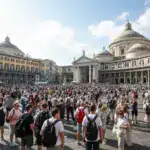
The event was a magnet, even drawing the pink jersey winner, who, with a triumphant smile, expressed his desire to stay for a vacation. The Giro successfully captivated thousands of tourists who, even on this day, were in constant motion between monuments and museums. Their flow through the narrow paths created by walls and barriers never ceased, and was managed by hundreds of police officers, financial police, and traffic wardens, all diligently opening passages to facilitate crossings during lulls. This continuous stream occasionally slowed as the rumble of team cars reached their ears, an alert signaling the approach of the colorful procession of athletes. Some watched intently, others more casually, but everyone participated in the race – that was the essence of the day.
A Global Chorus of Support
The spectators voiced their support in a multitude of languages, a cosmopolitan melting pot of Spanish, English, Chinese, and various Italian dialects, from the Venetian inflection to the open vowels of Sicilian. The important thing was to accompany the final Roman pedal strokes of a race as long and grueling as it was fascinating and rich in memorable images, with voices or anything pink at hand.
Rome: A Tapestry of Grandeur and Progress
The race offered classic snapshots of Rome’s “Grande Bellezza”: the Colosseum, the Imperial Forums, Trajan’s Markets, the elegant palaces of Corso Vittorio, and the Tiber’s shaded embankments lined with plane trees. These breathtaking images, though not unprecedented – this was the fourth consecutive year the Giro has celebrated its triumph in Rome, with a fifth already in sight – held a special significance. This 109th edition, beyond its historical backdrops, also showcased the future of a capital city that, at the cost of immense effort (from its administrators) and significant inconvenience (for its residents), is transforming to keep pace with modern times while never abandoning its past. Visible were the multi-colored mega-silos and towering cranes silhouetted against the construction site of the Piazza Venezia metro station, the scaffolding around the Torre dei Conti, which collapsed last November while under restoration, the protective netting over the construction sites along Via dei Fori Imperiali, the barriers of the Metro C excavations in Piazza della Chiesa Nuova, and newly laid sections of bike paths, still fresh from their cellophane wrapping.
Managing Major Events: An Economic Boon
Old Rome and future Rome stood in stark contrast, yet in a delicate balance that seemed only to enhance tourism and hospitality. The city’s experience in managing major events during the Jubilee – a period when Rome responded despite unforeseen challenges, such as the enthronement of Pope Leo after the passing of Pope Francis – likely instilled a newfound confidence. The city now feels less fragile and more capable of seizing opportunities for visibility and economic gain. The Giro alone injected 175 million euros into the city, a clear sign of an economic engine that seamlessly absorbed the grand pink event, harmonizing the arrival of cycling enthusiasts with the flow of “ordinary” tourism. Concurrently, equestrian events were taking place in Piazza di Siena, following the packed International Tennis tournaments, with the Golden Gala athletics meeting just around the corner. For the capital, the ride never stops.
Source: https://roma.corriere.it/notizie/cronaca/26_giugno_01/roma-abbraccia-un-giro-d-italia-mondiale-festa-tifosi-e-grande-bellezza-ba59c209-6cf0-4950-8dc3-156d42657xlk.shtml