
Milan, Italy – The anguish of Roberto Piazza, the Italian coach of the Iranian men’s national volleyball team and Allianz Milano, resonates from Milan to Tehran as he grapples with a volatile geopolitical landscape. Piazza, a man of the world and a meticulous tactician, finds himself at the heart of a situation that transcends the boundaries of sport, deeply affecting his team and personal well-being.
A Geopolitical Chessboard: Piazza’s Dual Role Amidst Conflict
Since September 2024, the Parma-born coach, 57, has taken on the challenging role of leading the Iranian national team until the Los Angeles 2028 Olympic Games. This adventure, however, has been overshadowed by political and cultural tensions, with recent events bringing the conflict alarmingly close to his athletes. Piazza’s experiences mirror those of Alessandra Campedelli, another Italian coach who previously led the Iranian women’s team, who has also expressed concern over her inability to contact her former players.
The current situation casts a long shadow over upcoming international competitions, including the Volleyball Nations League and the Cev Challenge Cup, where Allianz Milano is slated to play. Despite a recent victory against Turkey’s Altekma Sk Izmir, the return match on March 12 is fraught with uncertainty.
The Human Cost: Fear and Uncertainty Among Players
Piazza revealed the harrowing difficulty in communicating with his team and staff. “The right-hand man of the Federation managed to contact me only by approaching the Turkish border,” he recounted, emphasizing the severity of the communication breakdown. Players, many of whom have family in the affected regions, are consumed by anxiety. “Many players are still there and cannot get in touch with their families. It’s not a good situation,” Piazza added, highlighting the personal toll of the conflict.
This isn’t the first time Piazza’s tenure has been impacted by regional instability. Last summer, during the VNL tournament in Brazil, the team received news of attacks, but the distance provided a buffer. Now, with attacks reportedly intensifying in Karaj, Beirut, and Tehran, the immediacy of the threat is palpable.
Beyond the Court: The Interplay of Politics and Sport
Piazza’s predicament underscores a broader narrative where sport, often seen as a unifying force, becomes entangled in geopolitical turmoil. The Italian model of volleyball excellence, which Piazza embodies, is highly regarded globally. Yet, even this beacon of sporting achievement cannot escape the harsh realities of conflict.
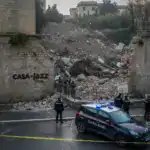
The destruction of the Ba’Sat sports complex in Tehran, reportedly by American and Israeli bombs, symbolizes the direct impact of the conflict on the very infrastructure of sport. This loss not only affects the current generation of athletes but also jeopardizes the future development of volleyball in the region.
A Call for Prioritization: Focus on the Game Amidst Chaos
Despite the overwhelming circumstances, Piazza maintains a professional resolve. “For the moment, we need to worry about volleyball. It might sound selfish, but I believe no one knows better than me what can happen, so it’s better to think about the field,” he stated, acknowledging the difficulty of this stance amidst the turmoil. His focus remains on the upcoming matches, including a crucial playoff game against Verona, even as the shadow of conflict looms large.
The Broader Implications: A War of Interests
Piazza’s observations echo sentiments expressed in previous reports, which characterize the conflict as a “war of interests.” The coach’s anguish is a poignant reminder of how global power struggles ripple through societies, affecting individuals from all walks of life, including those dedicated to the world of sport.
As the situation continues to unfold, the international community watches with bated breath, hoping for a swift resolution that will bring peace and stability to the region, allowing sport to once again serve as a symbol of unity and hope, rather than a casualty of conflict.
Source: https://www.ilgiorno.it/milano/cronaca/guerra-iran-teheran-ct-nazionale-roberto-piazza-caiohqm5