
Milan’s Drug Axis: Corvetto to Rogoredo – A City Under Siege
In the sprawling southern periphery of Milan, a disturbing narrative unfolds along the asphalt artery connecting Corvetto to Rogoredo. This axis, once a notorious hotspot for drug dealing, has recently been thrust back into the spotlight following a series of violent deaths and a shocking accusation against a police officer. The prevailing sentiment among residents, drug addicts, and pushers alike is one of profound distrust and fear, painting a grim picture of a city struggling to reclaim its streets.
The Unseen Scars of Corvetto: A Community on Edge
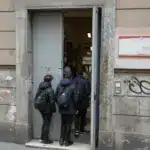
The investigation began in Corvetto, specifically in Via Mompiani, where the murder of Abderrahim Mansouri, allegedly by police officer Carmelo Cinturrino (also known as ‘Luca’ or ‘Thor’), has intensified the already palpable tension. Residents speak of a neighborhood where law enforcement is met with hostility, a sentiment encapsulated by graffiti declaring, ‘The neighborhood belongs to those who live in it, cops out of this city.’ This stark message underscores a deep-seated disconnect between the community and its protectors, a divide that has only widened with recent events.
An AMSA worker, cleaning the streets of Via Mompiani, lamented the decreasing controls and the brazen disregard for public order, citing instances of garbage being thrown from windows. This seemingly minor detail reflects a broader breakdown of social norms and a sense of abandonment among the populace.
Rogoredo’s Silence: A Truce, Not Peace
Further along the axis, in Rogoredo, the atmosphere is eerily quiet, a ‘ceasefire’ rather than a genuine peace. The notorious ‘Boschetto’ (small wood), once Italy’s largest open-air drug market, now stands in a disquieting silence. Empty streets and closed minimarkets bear witness to a community gripped by fear, especially after two deaths in a single month. Sami, a minimarket owner in Via Monte Cengio, expressed the collective anxiety: ‘These are not normal days. Two people have died in a month. We are afraid that something irreparable might happen.’
The area around Via Cassinis, where Chinese national Li Wenham was also killed by an officer after a confrontation, remains a stark reminder of the violence. Beggars and drug users, described as ‘ghosts’ by locals, linger on the fringes, their lives tragically short-lived. The railway tracks, a makeshift marketplace for doses, offer cocaine at alarmingly low prices, challenging the notion of Milan as an expensive city.
The Accused: A Police Officer’s Dual Life
The central figure in this unfolding drama is Carmelo Cinturrino, a 41-year-old assistant chief of police, now accused of voluntary homicide. His alleged involvement has sent shockwaves through the community and raised serious questions about corruption within law enforcement. Reports suggest Cinturrino, who was also known as ‘Luca’ and ‘Thor,’ had a history of violence and was allegedly extorting a disabled pusher, highlighting a disturbing intertwining of law and criminality.
The police union, initially collecting funds for Cinturrino’s defense, has since withdrawn its support, acknowledging the gravity of the emerging facts. This reversal underscores the deepening crisis of trust and the urgent need for accountability.
A Community’s Plea for Justice and Safety
The residents of Rogoredo, particularly those living near the drug park and the multinational corporations of Santa Giulia, feel increasingly abandoned. Federica, a shop assistant in Via Comacchio, voiced the frustration: ‘During the Olympics, the area was guarded, now there’s no one. We feel left to ourselves.’ This sentiment highlights a critical failure in sustained public safety efforts, leaving vulnerable communities exposed.
The tragic events and the ongoing investigation into the Milanese drug axis from Corvetto to Rogoredo reveal a complex web of social decay, economic disparity, and alleged corruption. The silence that now pervades Rogoredo is not one of peace, but a tense quietude, a community holding its breath, waiting for justice and a return to safety.
The questions remain: How deeply entrenched is the alleged corruption within the local law enforcement? What systemic failures allowed such a volatile environment to fester? And most importantly, what tangible steps will be taken to restore trust and ensure the safety of Milan’s most vulnerable communities?
Source: https://milano.corriere.it/notizie/cronaca/26_febbraio_25/milano-dal-corvetto-a-rogoredo-l-asse-dello-spaccio-della-droga-qui-non-puoi-fidarti-di-nessuno-9600cac3-5646-4f4f-bf2d-aff2a69b4xlk.shtml