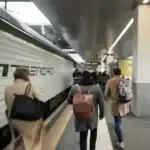

The decision by Trenord to overhaul its refund system in April 2024, moving from an automatic bonus to an individual claim process with stricter criteria, has sparked considerable controversy and concern among Lombardy commuters. What initially appeared as a procedural shift has, in practice, led to a near-total cessation of compensation, even as train punctuality demonstrably worsens. This raises critical questions about the balance between operational efficiency, passenger rights, and the social responsibility of public transport providers.
From Automatic Bonus to Individual Claim: A Shift in Responsibility
Prior to April 2024, Trenord subscribers whose lines failed to meet monthly punctuality standards automatically received a 30% discount on their next season ticket. This system, while not without its critics, offered a straightforward and accessible form of redress for service disruptions. The new system, however, calculates delays only for incidents exceeding 15 minutes and requires individual applications within a year of the incident. Crucially, the bonus is now only granted to those who purchased their season ticket in the affected month.
Trenord and the Lombardy Region justified this change by citing the need to align with ART 106/2018 regulations. However, as commuter associations have pointed out, the automatic bonus was not explicitly prohibited by these regulations. This suggests a deliberate choice to shift the burden of claiming compensation from the operator to the individual commuter, effectively creating a significant hurdle for those seeking redress. The immediate consequence has been a drastic reduction in claims, underscoring the effectiveness of this new barrier.
A Drastic Decline in Refunds, No Improvement in Service
The impact of the new system on reimbursement figures is stark and undeniable. In 2023, Trenord disbursed between 50,000 euros and over a million euros monthly in automatic bonuses, benefiting thousands of eligible commuters. Fast forward to 2024, post-reform: in June, a single request yielded 9.30 euros; in July, another totaled 4.23 euros. The highest recorded figure in September was 41,270 euros, distributed among 2,211 claims. This represents a staggering monthly refund reduction of up to 96% in some instances.
Compounding this issue is the concurrent decline in service punctuality. Data reveals that the percentage of trains arriving within 5 minutes decreased from 82.3% in 2023 to 80.1% in 2024. Similarly, punctuality within 15 minutes also saw a drop, from 95.8% to 95%. This juxtaposition of plummeting reimbursements against a backdrop of deteriorating service quality paints a concerning picture for the daily commuter, suggesting that the new system primarily benefits the operator rather than improving passenger experience or accountability.
The Disappearance of Delay Data: Obscuring Accountability?
Adding another layer of opacity to the situation is Trenord’s decision, starting from August 2025, to cease publishing monthly tables detailing delays and cancellations. These comprehensive tables, previously a vital tool for commuters and watchdog organizations to assess service performance, have been replaced by a mere list of indemnified routes. Even historical data, dating back to January 2024, has been removed, leaving only the lines that qualified for compensation visible.
This move effectively removes a crucial instrument for public scrutiny and makes it significantly harder to evaluate Trenord’s performance independently. Without transparent and readily accessible data on delays and cancellations, commuters are left in the dark, unable to verify claims of improved service or to hold the operator accountable for persistent issues. This lack of transparency further exacerbates the perception that the new refund system is designed to minimize financial outlay rather than to genuinely improve service or compensate affected passengers fairly.
The Commuter’s Dilemma: Rights vs. Reality
The changes introduced by Trenord present a significant dilemma for the average commuter in Lombardy. On one hand, the right to compensation for disrupted service is enshrined in regulations. On the other hand, the practicalities of claiming this right have become so cumbersome and restrictive that for many, it is simply not worth the effort. The individual claim process, coupled with reduced eligibility and the disappearance of transparent data, effectively disincentivizes seeking redress, thereby undermining the very principle of passenger protection.
This situation highlights a broader challenge in the realm of public services: how to balance the financial realities of operating complex systems with the legitimate expectations and rights of the users. While operators may argue for efficiency and cost-effectiveness, the erosion of passenger trust and the perception of unfair treatment can have long-term negative consequences, potentially driving commuters away from public transport and towards less sustainable alternatives.
Looking Ahead: The Need for Re-evaluation
The current state of Trenord’s refund system and service punctuality calls for an urgent re-evaluation. While the company may be adhering to the letter of certain regulations, the spirit of passenger protection appears to have been lost in the process. Commuter associations and regional authorities must engage in a constructive dialogue to find solutions that are both economically viable for Trenord and genuinely fair and accessible for its passengers.
This could involve exploring hybrid models that combine elements of automatic compensation with simplified individual claim procedures, reintroducing transparent performance data, and investing in infrastructure and operational improvements to enhance punctuality. Ultimately, a public transport system thrives on the trust and satisfaction of its users. The current trajectory of Trenord’s refund policy risks eroding that trust, with potentially far-reaching implications for urban mobility in Lombardy.
Source: https://www.milanocittastato.it/news/trenord-oltre-an-anno-senza-rimborsi-automatici-indennizzi-quasi-azzerati/